By: Joe Ephraim, Calabar
The Cross River State Government has made significant strides in enhancing public health by validating national nutrition and Social and Behaviour Change Communication (SBCC) strategies into practical frameworks tailored for the state.
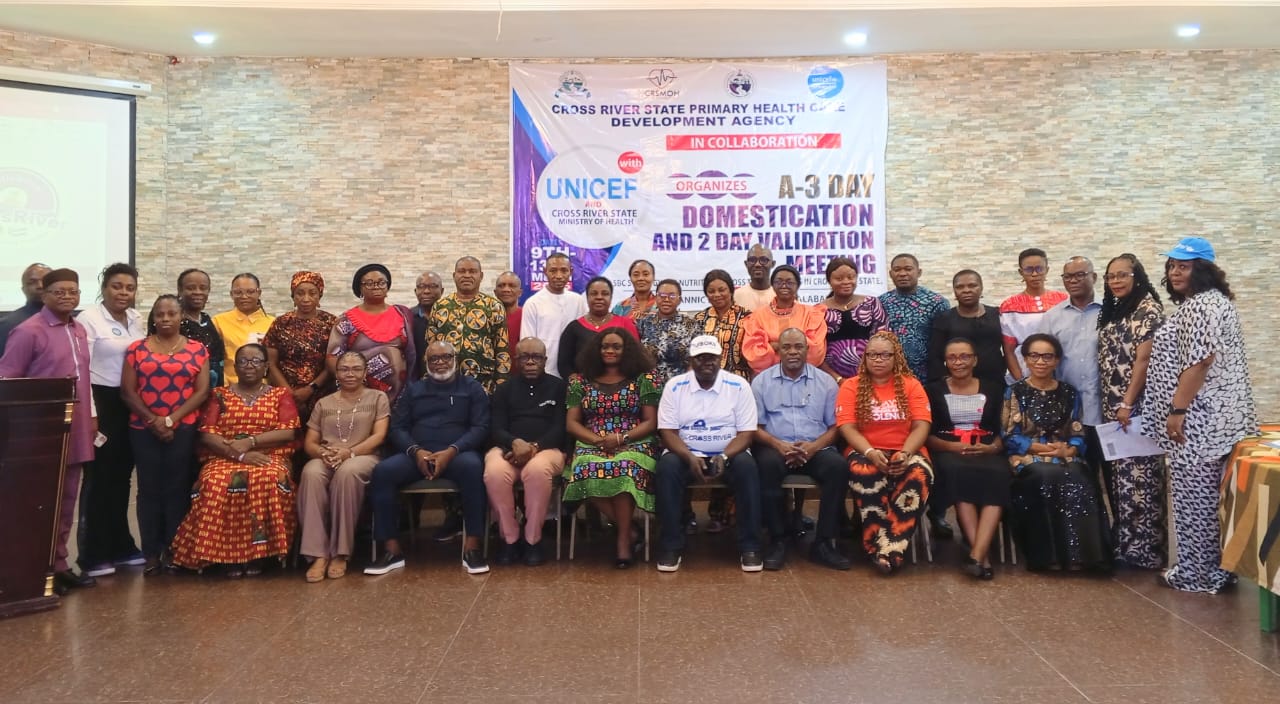
A high-level technical meeting, organized by the Cross River Primary Healthcare Development Agency, the State Ministry of Health, and UNICEF, gathered policymakers, development partners, and public health experts to align national objectives with the socio-cultural contexts of local communities.
The workshop, held at Dannic Hotels in Calabar, concluded with the formal endorsement of essential policy documents and implementation frameworks aimed at guiding nutrition programs and behavioral change initiatives throughout all 18 local government areas.
Dr. Vivien Mesembe Otu, Director General of the Cross River Primary Healthcare Development Agency, highlighted the workshop’s importance in connecting policy formulation with grassroots service delivery. She emphasized that adapting national strategies to state-specific frameworks would facilitate targeted interventions addressing community nutrition needs.
Dr. Otu pointed out that primary healthcare serves as the frontline for service delivery, affirming the agency’s commitment to ensuring these strategies are effectively implemented in facilities and communities statewide.
She also stressed the necessity of ongoing collaboration with partners and stakeholders, noting that advancements in immunization, maternal health, and nutrition result from coordinated efforts.
Commissioner for Health Dr. Egbe Ayuk remarked that the success of the workshop would be evaluated not just based on the quality of the produced documents but on their execution and the tangible impact on citizens. He urged that the validated strategies should not languish on shelves, but instead be transformed into actionable plans yielding measurable outcomes.
He mentioned that action points generated during the workshop were assigned to specific institutions with clear timelines to ensure accountability and monitor progress. He described this initiative as part of the state government’s move from merely formulating policies to embracing results-driven governance, focusing on real improvements at the community level.

Dr. Ayuk also stressed that tackling malnutrition necessitates a comprehensive approach that includes maternal care, household practices, community dynamics, and fortifying health systems. He noted that SBCC serves as a valuable tool for promoting positive behavioral changes through culturally relevant communication that resonates with community realities.
He expressed gratitude to development partners, particularly UNICEF, for their ongoing support in strengthening health systems and enhancing outcomes for children and families in the region.
The Commissioner reported progress in key health metrics, including reductions in child stunting and improvements in immunization rates and maternal healthcare services. He announced that all 196 wards in the state now have at least one trained healthcare worker or midwife, a milestone anticipated to improve safe deliveries and reduce maternal and child mortality.
While celebrating these advancements, he cautioned against complacency, urging stakeholders to redouble their efforts, reminding them that disagreements in policy matters should not impede shared goals.
Reiterating the government’s commitment, Dr. Ayuk stated that Cross River aims to become one of Nigeria’s leading states in healthcare by 2027, focusing on cultivating a healthier population and maintaining partnerships to achieve sustainable development objectives.