By: Joe Ephraim, Calabàr
Former lawmaker and public administrator, Dr. Orok Otu Duke, has called on minorities across Nigeria to actively document their history, culture, and personal experiences.
He warned that failing to write their own stories leaves them vulnerable to distorted historical narratives.
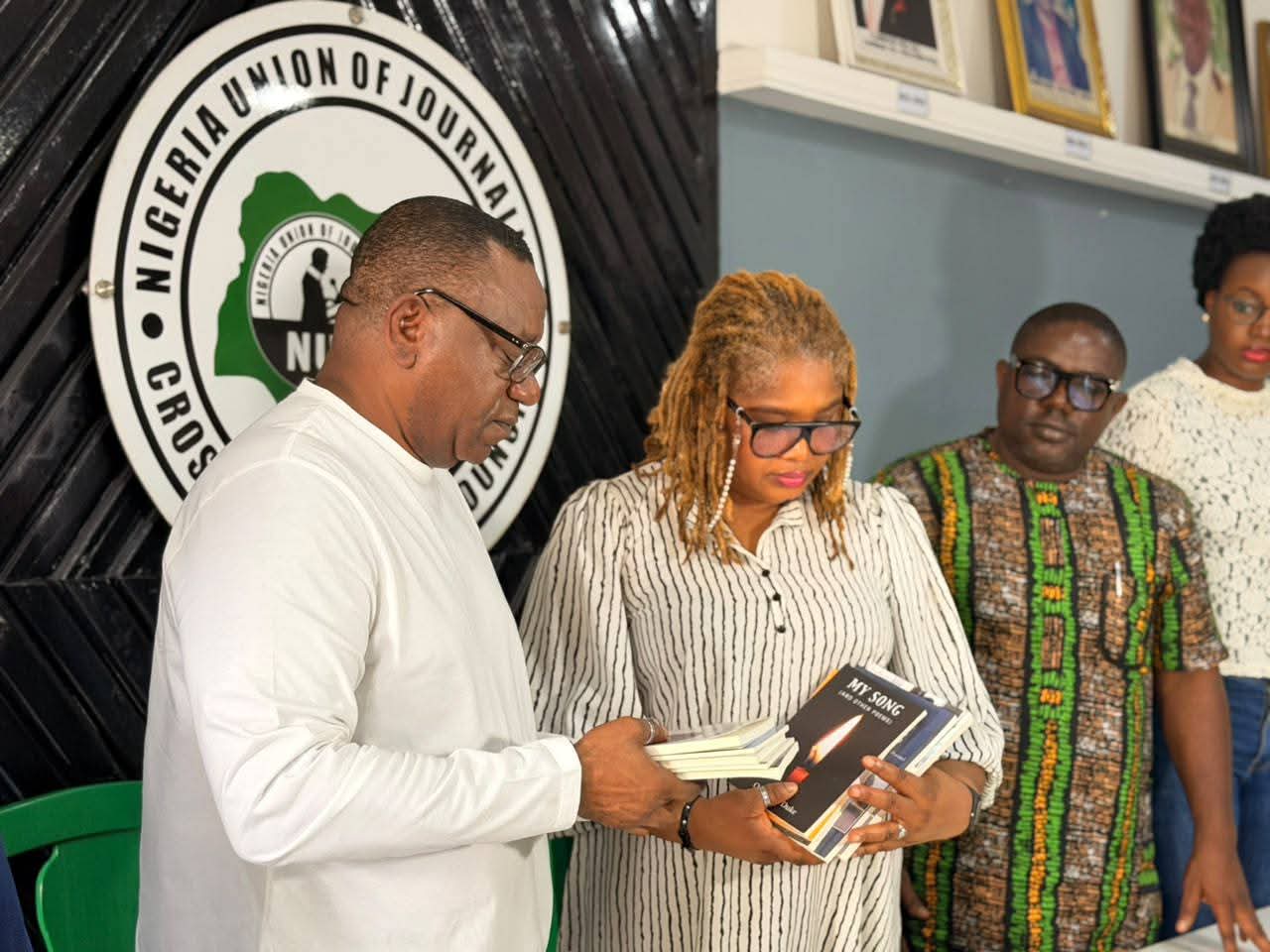
Dr. Duke made the call in Calabar during the official presentation of five new books to the Nigeria Union of Journalists (NUJ) Press Centre, ahead of their public presentation scheduled for November 5.
Reflecting on the importance of self-written history, Duke cited the African proverb: “Until the lion learns how to write, every story of the hunt will always glorify the hunter.”
He argued that mainstream accounts of the Nigerian Civil War (1967–1970) heavily focus on major ethnic groups while ignoring the massive casualties and atrocities suffered by minorities in the coastal and south-eastern regions.
“Most people in the minority died during the civil war. Everybody talks about how a particular tribe was killed, but that is not entirely true,” Duke stated.
“The war raged through coastal and minority areas, yet there are barely enough stories written about us. I had to make my contribution by documenting what I remembered as a child.”
The newly unveiled works—comprising three prose books and two collections of poetry—include: Welcome to Uyo, Treasures, Winnowing, Oluchi’s Story and Calabar Modern Stories.
Duke, who also referenced his previous literary contributions—including works on the Bakassi Peninsula crisis and his personal experiences during political crises in the 1990s—noted that his books are archived globally, including the U.S. Library of Congress, Amazon, and Google Books, to ensure permanence.
“If you don’t document your activities, culture, and way of life, you lose your communal information,” Duke said, revealing that he has five additional completed manuscripts awaiting publication.
“I urge others to write—not just about happy days, but about sad days, political detentions, and struggles. Let us tell our own story.”
Academic scholars and prominent media figures, including former ministers and professors from regional universities, are slated to review the books during the November 5 public launch.
Copies of the literature have been formally donated to the NUJ library in Cross River State to serve as reference materials for journalists and researchers.