By: Our Reporter, Calabar
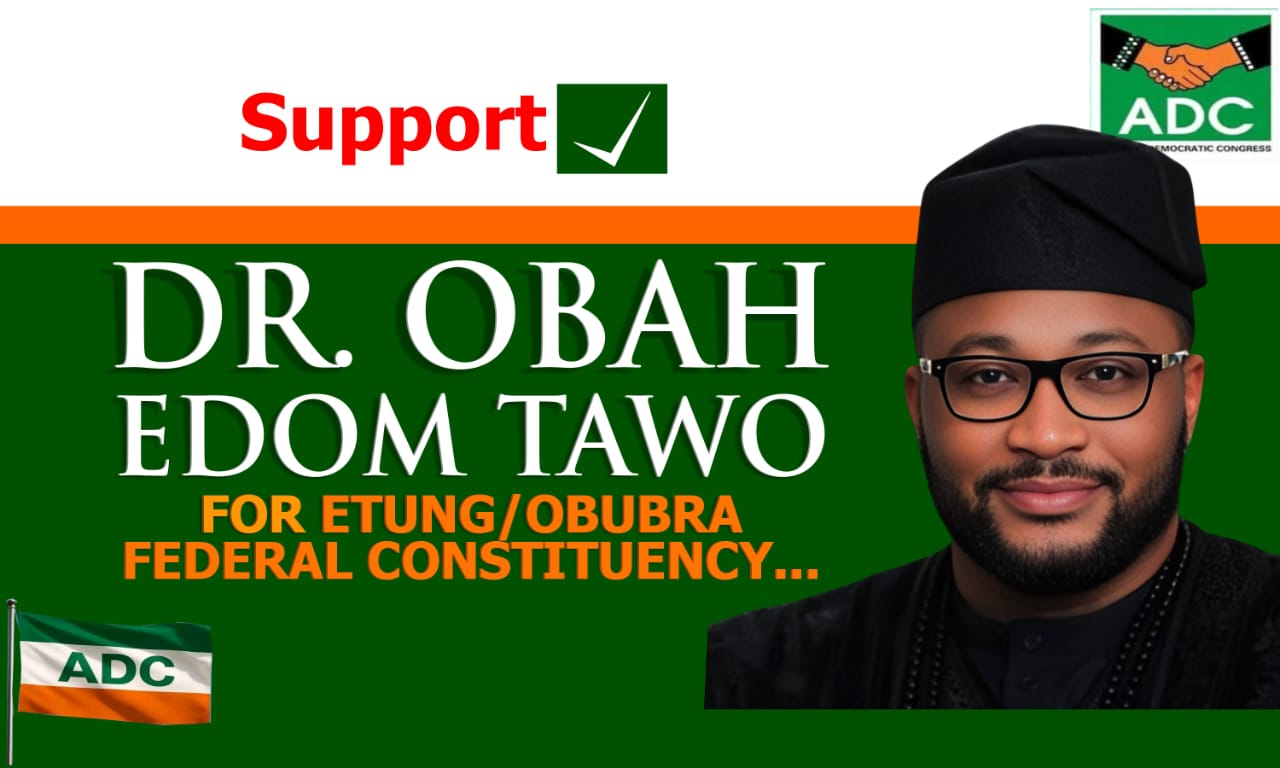
A House of Representatives aspirant for Etung/Obubra Federal Constituency on the platform of the African Democratic Congress (ADC), Dr. Obah Tawo, has unveiled a comprehensive development agenda focused on fixing critical road infrastructure, boosting local industry, and strengthening transparency in governance.
Tawo, an indigene of Bendegha in Etung Local Government Area, outlined his vision during an interview, describing the deplorable state of roads in the constituency as the most pressing challenge confronting residents.
He lamented that major access routes into Etung have deteriorated to near impassable conditions, significantly disrupting economic activities and daily life. According to him, the poor road network has particularly affected farmers, who struggle to transport produce to markets, thereby limiting income and productivity.
The aspirant noted that the impact of bad roads extends beyond commerce, citing difficulties faced by residents in accessing healthcare services. He stressed that delays caused by poor road conditions have contributed to avoidable emergencies, underscoring the urgency of prioritizing road rehabilitation and construction.
Beyond infrastructure, Tawo proposed tackling youth unemployment through agro-industrial development. He highlighted the constituency’s rich agricultural base, including cocoa and cassava production, and decried the absence of processing industries to add value to these resources.
According to him, establishing processing facilities for products such as chocolate, starch, ethanol, and cosmetics would create jobs, stimulate local economies, and increase revenue streams for residents.
On his unique selling points, Tawo identified his deep community roots, professional background, and commitment to ethical leadership as key advantages. He said his experience as a business executive and IT professional positions him to deliver practical, results-driven solutions.
He also referenced a prior initiative to establish a water production facility in the area, aimed at improving access to potable water, as evidence of his commitment to community development.
Addressing concerns about contesting under a relatively smaller political party, Tawo dismissed any perceived disadvantage, arguing that established parties have fallen short of public expectations. He expressed confidence that voters are increasingly open to credible alternatives focused on performance and accountability.
To promote transparency, he proposed the creation of a digital constituency register to track projects, contracts, and implementation status. He said the platform would be publicly accessible, enabling constituents to monitor progress and hold leaders accountable.
In addition, he outlined plans for community-based verification systems, where residents would actively confirm the execution of projects across sectors such as healthcare, infrastructure, electrification, and industrial development.
On legislative priorities, Tawo listed road development, improved healthcare access, and agro-industrialization as key focus areas. He pledged to expand medical outreach programmes, particularly targeting women and children, while advocating policies to support large-scale agricultural processing.
He also emphasized the need to attract federal projects and investments, stating his readiness to collaborate across party lines to deliver development outcomes.
Describing public office as a “contract with the people,” Tawo said he remains committed to measurable performance and accountability. He urged constituents to actively demand results and make informed electoral decisions.
Looking ahead, he projected that within his first three years in office, the constituency would witness significant improvements in road infrastructure, expanded healthcare outreach, and the introduction of industrial education programmes linked to agriculture.
He reaffirmed his commitment to building a constituency defined by inclusive, visible, and sustainable development.