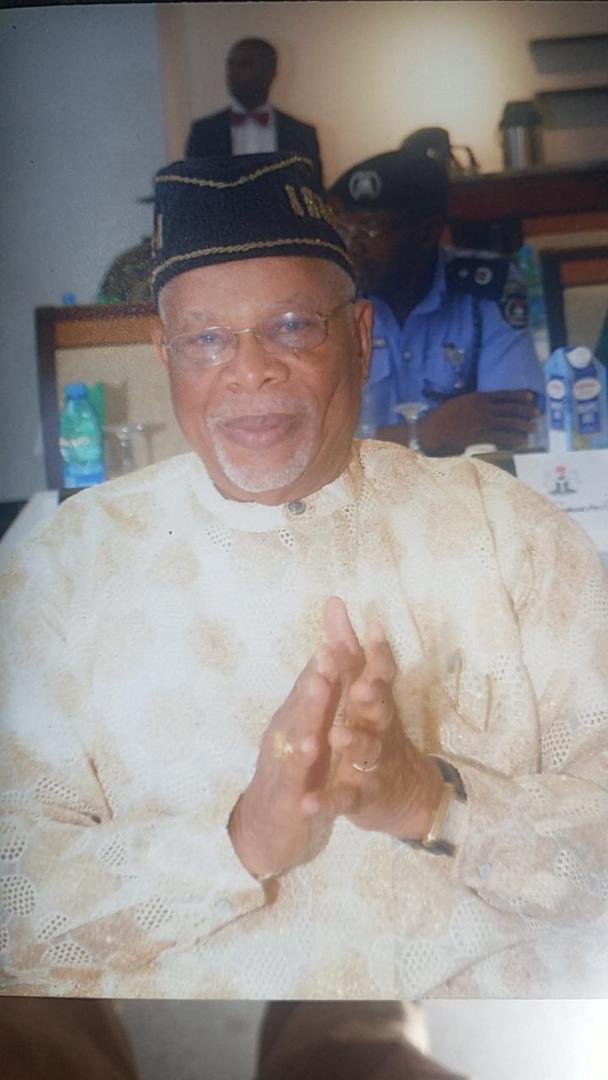
By: Vitalis Ugoh, Calabar
Textile manufacturers in Nigeria have appealed to the Federal government to approve special grant to assist them in reviving the country’s extinct textile industries.
Currently, over 30 textile companies in Nigeria have gone extinct for years taking toll on the country’s economy.
As a result, the country has lost billions of Naira, over 60, 000 of their workers have lost their jobs and the auxiliary companies, suppliers, distributors, transporters and others have lost their jobs and businesses.
Speaking to our Correspondent in Calabar, the pioneer President of the Carpet Manufacturers Association of Nigeria, Otuekong Sunny Jackson Udoh, said that the entire indigenous textile manufacturing companies like “Jackson Devos, Aswani” and many others have gone aground because of their chief executive roles and fight for democracy under NADECO.
The only two surviving ones are owned by foreigners and that is capital flight
Chief Udoh, who is the Chairman Jackson Devo’s (FZE) said, “for any economy to grow, the government as a matter of necessity and urgency should bring back the industries which are the backbone of any economy”.
According to him, “Nigeria is trying to encourage the revival of its private sector, especially the present interest shown by the President Bola Ahmed Tinubu’s administration towards the revival of the manufacturing sector.”
He declared, “any country that does not pay great attention to the development of its private sector, which includes the small scale industries, cannot create the required and much desired employment for its citizens. This is the fate of Nigeria. The word “production” was like a mantra during the last general elections campaigns”.
“Production is the manufacturing of a product to meet the needs of consumers Any country relying on importation of most products the citizens consume cannot enjoy a stable economy because of certain economic deficiencies and market forces.”
“Nigeria continues to be a dumping ground for foreign goods as there is no encouragement from government for manufacturers to step up their game.”
“For more than 30 years, Jackson Devos has been one of the most respected manufacturing companies in Nigeria, Our product, Crown Carpet, became the leading brand across the country and is still in the market, with our wide range of quality products which our numerous distributors can attest to as we gain better market shares.”
“During its heydays, Crown Carpet, he said, sold beyond the shores of Nigeria. It was much sought-after in Ghana and other West African countries.”
Regrettably, “things became sore following the Nigeria Deposit Insurance Corporation (NDIC’s) alleged induced invasion which led to massive destruction of our machines. The worst attack came during the military regime led by Gen Sani Abacha between 1993 and 1998. As the chairman of the company, I became a scapegoat, with some of my brothers here in Cross River State due to irreconcilable political differences.”
“My decision to support, campaign for and sponsor the agitation for enthronement of democracy in the country made those appointed into position in that military regime to label me a chieftain of the National Democratic Coalition, (NADECO), he noted”.
Continuing, “our company was roundly attacked, and I was lucky to escape unharmed. However, the business was destroyed, the loan facility we obtained for the expansion of our factory was used as a weapon to fight us. It was a bad time to do business in Nigeria”.
He recalled that “bad policies and rapidly increasing exchange rates made it impossible to import some vital raw materials needed for production. The acquisition of loan facility was to ensure that the company’s expansion program runs smoothly . Unfortunately, the unstable government fiscal policies affected the expansion plan adversely”.
About 30 indigenous carpet manufacturing companies in the country have packed up and according to the Manufacturers Association of Nigeria (MAN), there are only two of such companies still functioning”.
The encouraging market climate bouyed us up to consider immediate expansion to meet consumers need. This was why we decided to take a loan and meet up the financial demands for the expansion, he noted.
According to him, “when the company received the loan, the exchange rate was $1 to 8 Naira. Thereafter, a sudden increase to 60 naira.”
Udoh said, “while processing forex for the purchase of the important machines needed for the expansion another increase reared up its ugly fang. We could not raise more money to purchase newly introduced automated machines, this really affected the expansion plan and production to meet market demands”.
“The debt kept piling and with the military propelled politically motivated attacks the production was hampered.”
He commend President Ahmed Bola Tinubu and the government for considering and providing financial support to manufacturers in the country. It is a good beginning. I would suggest that the government considers providing special intervention grants to manufacturers through the Apex bank, with proper monitoring mechanism to ensure that only companies with requisite structure and infrastructure benefit from such support.
He said “almost everyday, some of our big companies are moving their headquarters to Ghana. The implication of this is that factory workers and others are losing jobs and sources of livelihood. For instance, of all our textile industries, over 30 have exited Nigeria. This is worrisome”.
According to him, ,”Multinationals like Unilever and Dunlop have since left Nigeria for Ghana. I am always sad to find out that so many companies which offered employment to Nigerians have been shut down. This is not the Nigeria I dreamt of as a young man, which motivated me into manufacturing.”
Presently, he observed that ,”the business environment in the country is unfriendly due to stifling business regulations, corruption, and Forex crisis, among others, hoping that with good intentions, government will stem the tide and turn around the situation for good.”